
Lincoln Nautilus: Seatbelt Systems / Front Seatbelt Anchor and Pretensioner. Removal and Installation
Special Tool(s) / General Equipment
 |
501-403 Tool, Pretensioner Quick Connect TKIT-2012D-FL TKIT-2012D-ROW |
Removal
NOTE: Removal steps in this procedure may contain installation details.
NOTE: RH shown, LH similar.
-
Depower the SRS .
Refer to: Supplemental Restraint System (SRS) Depowering (501-20 Supplemental Restraint System) .
-
Remove the lower B-pillar trim panel.
Refer to: B-Pillar Trim Panel (501-05 Interior Trim and Ornamentation, Removal and Installation).
-
NOTE: Follow the unique instructions or graphic for this step in the installation.
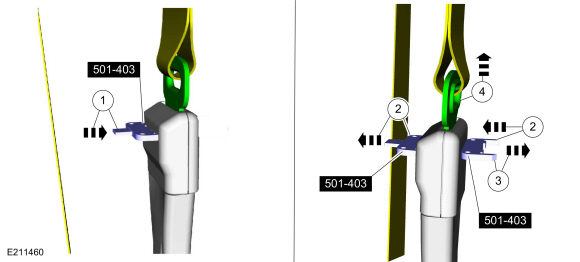
Disconnect the seatbelt from the anchor and pretensioner.
-
Insert the special tool.
Install Special Service Tool: 501-403 Tool, Pretensioner Quick Connect.
-
NOTE: Allow insertion of the second tool to push the first tool from the mini-buckle.
Insert the second tool.
Install Special Service Tool: 501-403 Tool, Pretensioner Quick Connect.
-
Remove the second tool.
Remove Special Service Tool: 501-403 Tool, Pretensioner Quick Connect.
-
Disconnect the seatbelt from the anchor and pretensioner and position aside.
-
Insert the special tool.
 |
-
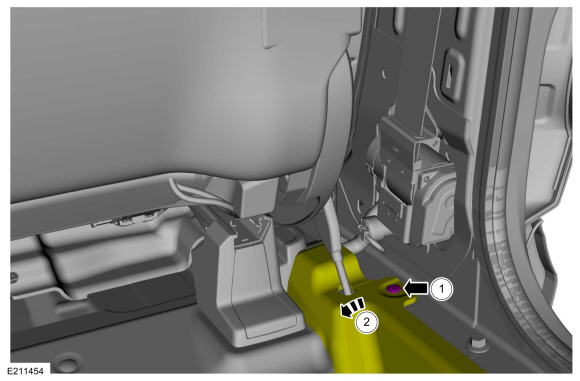
Position the carpet to access the seatbelt anchor and pretensioner.
-
Remove the pin-type retainer.
-
Position the carpet.
-
Remove the pin-type retainer.
 |
-
NOTE: Carpet shown removed for clarity.
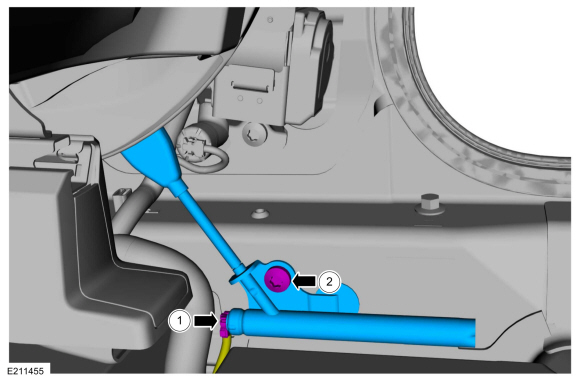
Remove the seatbelt anchor and pretensioner.
-
Disconnect the electrical connector.
-
Remove the bolt.
Torque: 30 lb.ft (40 Nm)
-
Disconnect the electrical connector.
 |
Installation
NOTE: During installation, make sure the seatbelt webbing is not twisted and the seatbelts and buckles are accessible to the occupants.
-
To install, reverse the removal procedure.
-
NOTE: During the latching sequence, tongue insertion should not be hindered by excessive effort and a click will be heard when the seatbelt buckle latches the tongue. If the seatbelt tongue cannot be inserted into the seatbelt anchor and pretensioner, it will be necessary to reset the latch inside the seatbelt anchor and pretensioner using the service tools.
Insert the seatbelt into the anchor and pretensioner.
.jpg) |
-
Repower the SRS .
Refer to: Supplemental Restraint System (SRS) Repowering (501-20 Supplemental Restraint System) .
-
Check the seatbelt system for correct operation.
Refer to: Seatbelt Systems (501-20 Seatbelt Systems) .
 Seatbelt Twisted at the Seatbelt Guide. General Procedures
Adjustment
NOTE:
Typical D-ring shown, others similar.
If required, remove the necessary trim panel(s).
Fold the seatbelt as indicated...
 Front Seatbelt Buckle. Removal and Installation
Removal
NOTE:
Removal steps in this procedure may contain installation details.
NOTE:
Driver seat shown, passenger seat similar.
Remove the front seat...
Other information:
Lincoln Nautilus 2018-2026 Service Manual: Glass, Frames and Mechanisms. Diagnosis and Testing
DTC Chart: HVAC Module Diagnostics in this manual assume a certain skill level and knowledge of Ford-specific diagnostic practices. REFER to: Diagnostic Methods (100-00 General Information, Description and Operation). HVAC Module DTC Chart DTC Description Action B1C83:12 Rear Defog Relay: Circuit Short to Battery ..
Lincoln Nautilus 2018-2026 Service Manual: Tire Pressure Monitoring System (TPMS) Sensor. Removal and Installation
Removal WARNING: The Tire Pressure Monitoring System (TPMS) sensor battery may release hazardous chemicals if exposed to extreme mechanical damage. If these chemicals contact the skin or eyes, flush immediately with water for a minimum of 15 minutes and get prompt medical attention. If any part of the battery is swallowed, contact a physician immediately. When disposing of Ti..
Categories
- Manuals Home
- 1st Generation Nautilus Owners Manual
- 1st Generation Nautilus Service Manual
- Massage Seats
- Interior Lamp Function. Adjusting the Instrument Panel Lighting Brightness. Ambient Lighting. Interior Lighting – Troubleshooting
- Opening and Closing the Hood
- New on site
- Most important about car
Changing a Flat Tire
WARNING: If the tire pressure monitor sensor becomes damaged it may not function.
Note: The use of tire sealant may damage your tire pressure monitoring system and should only be used in roadside emergencies. If you must use a sealant, use the Tire Mobility Kit sealant. Replace the tire pressure monitoring system sensor and valve stem on the wheel by an authorized dealer after use of the sealant.
Note: The tire pressure monitoring system indicator light will illuminate when the spare tire is in use. To restore the full function of the monitoring system, all road wheels equipped with tire pressure monitoring sensors must be mounted on the vehicle.
If you get a flat tire while driving, do not apply the brake hea
